West Indies Cricket Team Vs Pakistan National Cricket Team Timeline
Cricket transcends being merely a sport when nations with rich, diverse heritage compete.
The west indies cricket team vs pakistan national cricket team timeline represents a unique cricketing relationship between two vastly different cricket cultures.
From the sun-drenched islands of the Caribbean to the passionate stadiums of Pakistan, these teams have created a rivalry that bridges continents and traditions.
What makes their encounters special is the contrasting cricket philosophies – West Indies with their natural flair and expression versus Pakistan’s technical innovation and unpredictability.
Both teams have experienced golden eras and challenging transitions, producing cricket that swings between the sublime and the disappointing.
Their matches have given fans historic individual performances, dramatic collapses, and inspiring comebacks.
Beyond statistics and results, this rivalry tells a human story of how cricket connects different cultures, creates shared memories, and evolves through generations of players who carry forward their nations’ unique cricketing identities.
West Indies Cricket Team Vs Pakistan National Cricket Team Timeline
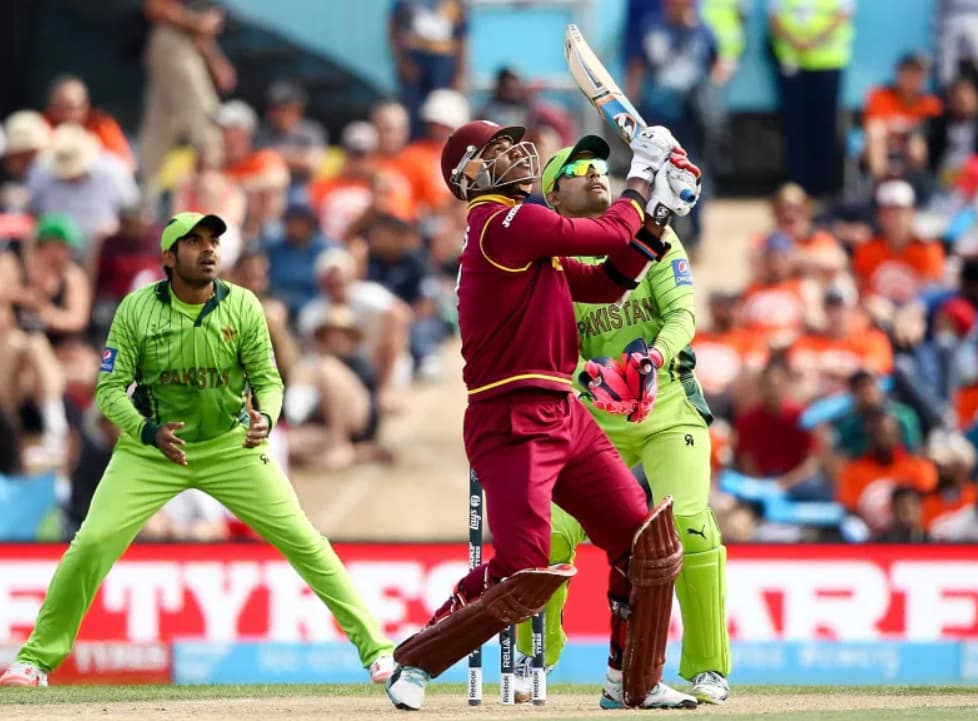
As we explore this fascinating cricket relationship, we’ll see how these teams have influenced each other and contributed to cricket’s rich global tapestry.
The Cricket Cultures
West Indies Cricket Identity
The West Indies Cricket Team represents more than just athletic prowess – it embodies a distinct Caribbean cricket culture shaped by:
- Colonial history and using cricket as a form of cultural expression and resistance
- Natural athleticism is celebrated through uninhibited stroke play and dynamic fielding
- Caribbean joy in cricket, with music, dancing, and a festive atmosphere at matches
- Communal pride in representing a collection of island nations under one cricket banner
Cricket in the West Indies developed as an expression of cultural identity. Throughout the 1970s and 1980s, when the team dominated world cricket, their success became a powerful symbol of post-colonial achievement. Players like Viv Richards batting without a helmet against the fastest bowlers represented not just sporting skill but cultural confidence.
The West Indian approach to cricket has always valued natural talent over rigid technique. Coaching in the Caribbean traditionally focused on enhancing players’ natural abilities rather than enforcing orthodox methods. This produced cricketers with distinctive styles who played the game with a freedom that excited fans worldwide.
Pakistan’s Cricket Philosophy
Pakistan’s cricket culture stands as one of the most distinctive in the world, characterized by:
- Street cricket innovation, where players develop unorthodox techniques and skills
- Reverse swing bowlingwas pioneered by Pakistani fast bowlers
- Wristy batting techniques adapted to suit local conditions
- Emotional intensity and passionate support from fans
Pakistan’s cricket development has often followed unconventional pathways. Many of their greatest players were discovered in informal settings rather than structured academy systems.
This has given Pakistani cricket a unique flavor – players who don’t fit standard coaching manuals but possess extraordinary natural gifts.
The country’s cricket culture places special emphasis on bowling excellence. From the early days of Fazal Mahmood to the modern era of Shaheen Shah Afridi, Pakistan has maintained an exceptional tradition of producing fast bowlers.
Similarly, from Abdul Qadir to Yasir Shah, their leg-spinners have kept alive the art of wrist spin even when it declined elsewhere.
Statistical Rivalry Through the Decades
The head-to-head record between these teams tells a story of changing fortunes across different eras:
| Decade | Tests (WI-PAK-Draw) | ODIs (WI-PAK-Draw/NR) | T20s (WI-PAK-NR) |
|---|---|---|---|
| 1950s-1970s | 8-2-7 | 10-3-0 | No T20s |
| 1980s | 5-3-4 | 30-15-1 | No T20s |
| 1990s | 3-6-2 | 20-18-1 | No T20s |
| 2000s | 2-5-2 | 10-16-1 | 0-3-0 |
| 2010s | 1-5-0 | 1-8-0 | 3-9-3 |
| 2020s | 1-1-0 | 0-3-0 | 0-3-0 |
This decade-by-decade breakdown reveals some fascinating patterns:
- The 1970s-1980s represent the West Indies’ period of dominance, particularly in ODIs
- The 1990s marked a transition period with more balanced results
- Since the 2000s, Pakistan has established clear superiority across formats
- The T20 era has been dominated by Pakistan, reflecting their better adaptation
These statistics paint a picture of a rivalry that has evolved through cricket’s changing landscape. When the West Indies were at their peak, they dominated this matchup as they did against most teams. As their power waned and Pakistan developed their own golden generation, the balance shifted dramatically.
Legendary Individual Performances
Batting Masterclasses
Some of cricket’s most memorable innings have come in matches between these teams:
- Brian Lara’s 216 (Karachi, 1997) – A batting exhibition against quality spin bowling
- Babar Azam’s 196 (Kingston, 2021) – Nearly batting through the fourth innings to save a Test
- Viv Richards’ 123 (Melbourne, 1984) – A World Series Cricket classic against Imran’s team
- Younis Khan’s 153 (Bridgetown, 2005) – A match-winning century in challenging conditions
- Gordon Greenidge’s 134 (Faisalabad, 1986) – Dominant opening batting against reverse swing
These performances showcase batting excellence across different eras and conditions. Lara’s double century against Pakistan’s spin quartet demonstrated his genius against turning balls. Decades later, Babar’s rear-guard action showed the evolution of batting technique and mental fortitude.
Bowling Brilliance
The bowling battles have been equally impressive:
- Michael Holding’s 6/21 (Lahore, 1980) – Pace bowling at its most intimidating
- Wasim Akram’s 6/30 (Sharjah, 1990) – A masterclass in left-arm swing bowling
- Curtly Ambrose’s 7/25 (Barbados, 1993) – Destroyed Pakistan’s batting with bounce
- Saqlain Mushtaq’s 5/30 (Toronto, 1999) – Introduced many to the “doosra”
- Shaheen Shah Afridi’s 6/51 (Kingston, 2021) – The new generation announcing itself
These bowling performances demonstrate the contrasting styles that make this rivalry so interesting. West Indian fast bowlers relied primarily on pace, bounce, and intimidation. Pakistani bowlers showcased swing, seam, and spin with numerous variations and subtleties.
Key Turning Points in the Rivalry
Several moments have defined this cricketing relationship:
The 1975 Sabina Park Test
This match marked Pakistan’s first Test victory in the Caribbean, achieved through tactical innovation. Captain Mushtaq Mohammad instructed his bowlers to use a short-pitched attack against the usually dominant West Indies batsmen. This strategic approach showed that Pakistan could challenge the emerging West Indies powerhouse by targeting specific weaknesses.
The 1986-87 Pakistan Tour
The West Indies’ tour of Pakistan in 1986-87 represented the clash of titans at their peak. This series featured cricket royalty on both sides – Viv Richards, Gordon Greenidge, and Malcolm Marshall against Imran Khan, Javed Miandad, and Abdul Qadir. The hard-fought series demonstrated that Pakistan could stand toe-to-toe with the mighty West Indies, signaling their emergence as a world cricket power.
The 1993 Champions Trophy Final
Pakistan’s victory in the 1993 Champions Trophy final in Sharjah represented a symbolic passing of the baton. As the West Indies’ golden era was ending, Pakistan’s team under Imran Khan (in his final year) claimed a significant trophy by defeating the formerly invincible Caribbean side. This match officially marked the transition of power in this rivalry.
The 2017 T20 Series
The 4-0 T20 series sweep by Pakistan in 2017 confirmed their complete dominance in the shortest format. This series illustrated how far the balance had shifted, with Pakistan’s professional, specialized T20 approach overwhelming the West Indies’ more instinctive style. It demonstrated the growing gap between the teams in adapting to cricket’s newest format.
Famous Player Rivalries
Within the team rivalry, several fascinating individual battles have captured fans’ imagination:
Viv Richards vs. Imran Khan
This was a clash of titans – arguably the most dominant batsman against one of cricket’s greatest all-rounders. Their battles in the 1980s represented cricket at its highest level. Richards’ aggressive intent against Imran’s hostile pace created some of cricket’s most compelling moments. Both players had enormous respect for each other’s abilities while never backing down from the challenge.
Brian Lara vs. Wasim Akram
The contest between Lara’s batting genius and Akram’s bowling wizardry in the 1990s showcased technical brilliance from both sides. Lara’s ability to read Akram’s variations was countered by Wasim’s talent for producing the unplayable delivery. Their encounters were chess matches played at high speed, with subtle adjustments and counter-adjustments on both sides.
Babar Azam vs. Kemar Roach
In recent years, the battle between Pakistan’s batting superstar and West Indies’ veteran fast bowler has continued the tradition of high-quality individual contests. Roach’s experience and seam movement challenge Babar’s technical excellence, creating a fascinating modern chapter in this rivalry’s individual battles.
Fan Perspectives
The cricket supporters from both regions have unique views on this rivalry:
Caribbean Cricket Culture
For West Indian fans, matches against Pakistan have always been about artistic expression. Caribbean supporters appreciate skill and flair regardless of which team displays it. When Pakistan produces magical bowling or batting, West Indian crowds respond with genuine appreciation. This reflects the Caribbean approach to cricket as entertainment rather than merely competition.
The famous Sabina Park crowd in Jamaica is known for its knowledgeable assessment of cricket quality. Even when supporting their home team passionately, these fans acknowledge quality cricket from opposition players. Pakistan’s wristy batsmen and skilled bowlers have often received standing ovations from West Indian crowds.
Pakistani Cricket Passion
Pakistani fans bring incredible emotional intensity to this rivalry. Cricket in Pakistan transcends sport to become a national passion, with matches against former champions like the West Indies taking on special significance. The country virtually stops for important cricket matches, with streets emptying as fans gather around televisions.
The return of international cricket to Pakistan in recent years has added a new dimension to this rivalry. When the West Indies toured Pakistan in 2021, the joyous atmosphere in packed stadiums reflected both cricket enthusiasm and gratitude for international teams returning after a long absence.
Impact on World Cricket
This rivalry has contributed significantly to cricket’s global development:
- Fast bowling evolution – From West Indies’ pace quartets to Pakistan’s reverse swing innovation
- Spin bowling revival – Pakistan’s spinners kept traditional arts alive when they declined elsewhere
- Power hitting techniques – West Indies batsmen expanded cricket’s offensive boundaries
- Cricket’s global appeal – Their distinctive styles attracted fans from non-traditional markets
Both teams have also influenced cricket through their distinctive cricket cultures. The West Indies showed how natural athleticism and joy could transform cricket from its formal origins. Pakistan demonstrated how the sport could thrive through unconventional development pathways and technical innovation.
Future Prospects: The Next Generation
The future of this rivalry rests with emerging talents from both nations:
Rising West Indies Stars
- Jayden Seales – Fast bowler with genuine pace and movement
- Joshua Da Silva – Technically sound wicketkeeper-batsman
- Gudakesh Motie – Promising left-arm spinner
- Mikyle Louis – Explosive middle-order batting talent
These young players represent the latest chapter in West Indies cricket. They face the challenge of recapturing their team’s former glory while developing their own identity. The promising fast bowling resources suggest a potential return to the pace tradition that defined West Indies cricket at its peak.
Pakistan’s Next Generation
- Naseem Shah – Express pace bowler with natural swing
- Mohammad Haris – Innovative batting talent
- Abrar Ahmed – Mystery spinner with numerous variations
- Rohail Nazir – Technically gifted wicketkeeper-batsman
Pakistan continues its tradition of unearthing remarkable talent. These young players combine traditional Pakistani cricket skills with modern fitness and professionalism. The future contests between these emerging players will write the next chapter of this fascinating rivalry.
FAQs: Cultural and Historical Dimensions
- How have broadcasting changes affected this rivalry?
The global television era transformed this rivalry from isolated series to worldwide entertainment. When these teams first met, radio commentary was the primary medium for most fans. The television era brought their contrasting styles to global audiences, while modern digital platforms have made their entire rivalry history accessible to new generations of fans.
- What role have neutral venues played in this rivalry?
Sharjah in the UAE became an important neutral venue for this rivalry in the 1990s, hosting memorable ODI contests. Later, when security concerns prevented international cricket in Pakistan between 2009-2019, their “home” matches against the West Indies were played primarily in the UAE. These neutral venue matches created unique atmospheres with passionate expatriate communities supporting both teams.
- How has the IPL and T20 franchise cricket affected this rivalry?
The rise of T20 leagues has created both challenges and opportunities. While international availability has sometimes been affected, these leagues have allowed West Indian and Pakistani players to become teammates, developing mutual respect and understanding. Players like Dwayne Bravo and Shoaib Malik have shared dressing rooms in various leagues, bringing elements of each cricket culture together.
- Which grounds are most associated with this rivalry?
Kensington Oval in Barbados and National Stadium in Karachi have hosted the most encounters between these teams. These venues represent the heart of their respective cricket cultures – Kensington with its passionate Caribbean atmosphere and Karachi with its knowledgeable, cricket-obsessed crowds. Matches at these venues often capture the essence of this rivalry.
- How have political and economic factors influenced this cricket relationship?
Despite having no significant political tensions, economic challenges have affected both cricket systems. Limited resources compared to wealthier cricket nations have created similar challenges, with talent drain to T20 leagues and administrative issues affecting both teams’ consistency. These shared challenges have created a certain solidarity between the two cricket boards.
Also Check:
- Australian Men’s Cricket Team Vs India National Cricket Team Match Scorecard
- Afghanistan National Cricket Team Vs India National Cricket Team Timeline
- South Africa National Cricket Team vs England Cricket Team Match Scorecard
- Bangladesh National Cricket Team vs New Zealand National Cricket Team Timeline
- Sri Lanka National Cricket Team Vs India National Cricket Team Timeline
- Afghanistan National Cricket Team Vs Bangladesh National Cricket Team Timeline
Conclusion: A Unique Cricket Relationship
The cricket timeline between the West Indies and Pakistan represents more than just a sporting rivalry – it’s a cultural connection between distant cricket traditions.
From the beaches of the Caribbean to the streets of Lahore, cricket provides a common language that bridges vast geographical and cultural differences.
What makes this relationship special is how it showcases cricket’s beautiful diversity. The West Indies introduced joy, athleticism, and natural flair to a game with formal English roots.
Pakistan brought innovation, unorthodox techniques, and emotional passion. When these approaches meet, the result is cricket that demonstrates the sport’s full spectrum of possibilities.
The statistical record shows a rivalry that has evolved through cricket’s changing landscape. From the West Indies’ dominance in the 1970s and 1980s to Pakistan’s ascendancy in recent decades, the balance has shifted with cricket’s global evolution.
Yet beyond the numbers lie the human stories – individual brilliance, team triumphs, and shared cricket moments that connect generations.
As cricket continues to evolve in the T20 era and beyond, this rivalry faces both challenges and opportunities. Economic pressures and competing attractions test both cricket systems.
Yet the emergence of exciting young talents suggests this cricketing relationship will continue to thrive and adapt.
For cricket lovers, West Indies versus Pakistan matches will always offer something special – the unexpected genius of a Pakistani bowler, the explosive power of a West Indian batsman, and the sense that cricket’s rich traditions are being carried forward in unique ways.
In a sport increasingly dominated by a few wealthy nations, this rivalry reminds us of cricket’s global spirit and diverse character.
Perhaps the true measure of this rivalry’s significance lies not in statistics but in how it has enriched cricket’s cultural tapestry.
Through their encounters over decades, the West Indies and Pakistan have shown that cricket at its best isn’t just about winning and losing – it’s about expressing national character, celebrating skill, and connecting different parts of our world through a shared love of sport.